
Soil pH and nutrients
Welcome to the influence of soil pH and nutrient interactions in the soil course, please study all the information below, understanding all key elements. When you have finished studying, please take the test.

Course content
Soil pH and nutrients
Soil pH is a measure of the concentration of H+ ions in solution. A low pH value indicates a high concentration of H+ ions and consequently an acidic soil. With alkaline soils the reverse is true; a high pH value signifying a low concentration of H+ ions.
The pH scale is logarithmic (to the base 10) so that a change in pH from 7.0 to 6.0 reflects a 010-fold increase in acidity. The availability of nutrients to plants is affected by the pH of the soil. Since all nutrients are either weakly positively charged (Cations +ve) or negatively charged (Anions –ve).
| Cations | Anions |
| Potassium K+ | Nitrate NO3- |
| Iron Fe+++ | Borate B4O7-- |
| Copper Cu++ | Phosphate PO4- |
| Calcium Ca++ | Molybdate MoO4-- |
| Sodiam Na++ | Chloride Cl- |
| Zinc ZN++ | Iodate IO3- |
| Magnesium Mg++ |
Most soil colloids (e.g. clays and humus) have a negative charge and attract positively charged cations. The cations are held or ‘locked up’ until replaced or released by other cations. In this way they can become slowly available to plant roots or are leached through the soil profile. Anions are not generally held in place by soil colloids (because both have a negative charge) and so tend to remain in the soil solution.
This makes them readily available to the plant, but also prone to leaching. The exception is phosphorus which is negatively charged but can be held quite strongly in the soil by cations; principally calcium, aluminium and iron.
Clay and humus provide the sites to adsorb cations, and ‘Cation Exchange Capacity’ (CEC) is the ability of a soil to hold cationic nutrients. Soils with higher organic matter or clay content will have a higher CEC than sands, for example. CEC can be determined by soil analysis. Soil pH is influenced by CEC and the order of preference in which nutrients are bound to soil colloids.
Al3+ > H+ > Ca2+ > Mg2+ > K+ = NH4+ > Na+
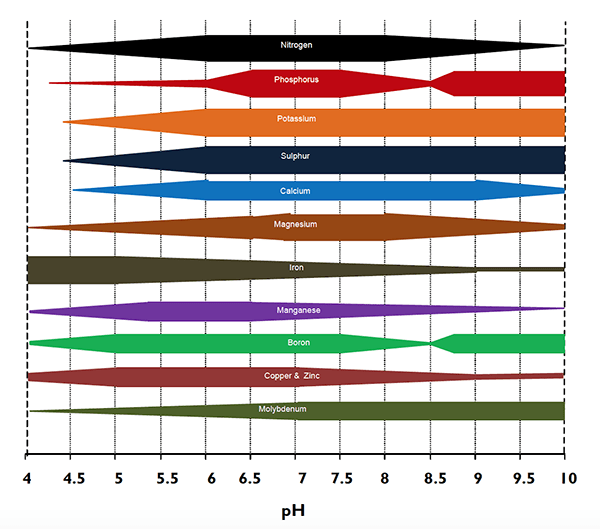 Figure 1: Influence of Soil pH on nutrient availability.
As soil acidity increases, the concentration of H+ increases (and the soil pH decreases). The H+ ions are attached to the colloids and displace other cations (e.g. Na+ NH4+ K+ Mg2+) from the colloids and into the soil solution. This therefore decreases the CEC of the soil. Inversely, when soils become more alkaline (pH increases), the amount of available cations in solution decreases because there are fewer H+ ions to push them into the soil solution from the colloids (CEC increases).
A small proportion of soil particles (1-5%) have a positive charge, and similar to the CEC, the Anion Exchange Capacity is a measurement of the positive charges in soils affecting the amount of negative charges which a soil can absorb. Again there is an order of preference of absorption.
H2PO4 - > SO4 -- > Cl-> NO3 -
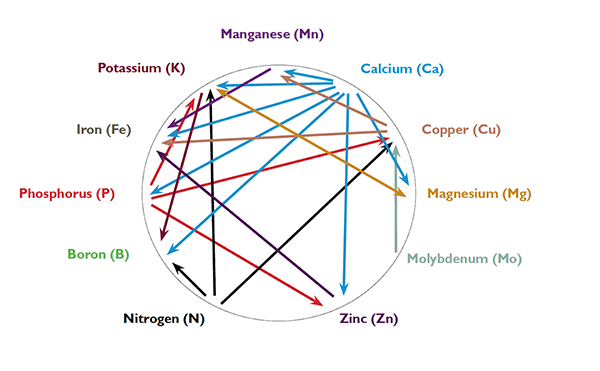 Figure 2 shows the interactions between different elements and their uptake.
Anion Exchange Capacity (AEC) generally decreases when pH drops and increases when pH rises. The influence of soil pH on the relative availability of each nutrient is summarised in Figure 1. In general, most micronutrients become less available as the pH increases (e.g. manganese, copper, zinc and iron), with the exception of molybdenum and boron (above pH 9) which become more available. Very acidic soils can reduce the availability of potassium, magnesium, calcium and molybdenum. For example, at pH 8 the availability of manganese is reduced in comparison to pH 6.5.
Figure 2 shows the interactions between different elements and their uptake. Each element is colour coded to help identify the different relationships, for example Calcium (Ca) reduces the availability of a range of nutrients including Boron, Iron and Magnesium, Manganese and Zinc.
For calcium, the reduced availability of other nutrients may be as a result of precipitation with calcium carbonate by affecting pH or by elements being adsorbed to calcium carbonate particles.
Potassium or Magnesium are mutually antagonistic, so a high level of either can reduce the availability of the other.
| A high level of: | Reduces the availability of: |
| Calcium | Boron, iron, manganese, magnesium and zinc |
| Magnesium | Potassium |
| Potassium | Magnesium |
| Nitrogen | Copper |
| Copper | Iron |
Lesson notes
- Study the difference of low and high pH
- Understand how different pH levels affect nutrients
- Study how certain nutrients reduce the availability of others