
Turf pests
Please study all the turf pest information below, understanding each pest and management. When you have finished studying, scroll down to the bottom to take the test.

Course content
Introduction
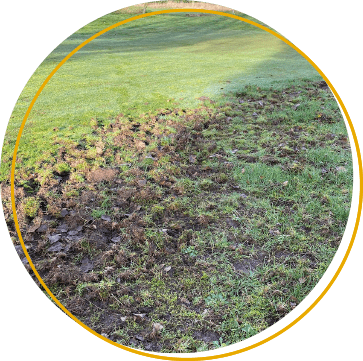
Normally, we describe insect activity when we refer to turf pests but the attention of animals and birds that feed on the insects can also cause considerable damage. Secondary damage is often more severe, as animals such as badgers dig up the turf and birds peck at the surface whilst looking for the insects.
Leatherjackets, which are the larvae of the crane fly, are a particular concern, eating roots and shoot tissue, eventually weakening and causing the grass to yellow and then brown as it dies back.
Chafer grubs also cause the most damage in the larvae stage, again feeding on root tissue and with little to anchor the grass to the soil it can easily be rolled back to reveal the level of infestation.
The activity of casting worm species are particularly disruptive to turf, as they encourage weed infestation and can undermine the quality of playing surfaces.
Species of nematodes can weaken the turf by extracting nutrients from root tissue.
Pest control measures are an important requirement for maintaining the integrity of turf. Whilst there a few chemical options for control of insect pests in turf, cultural and biological approaches are now receiving greater focus from turf managers.
Leatherjackets
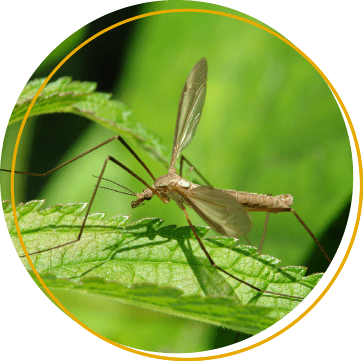
These are the grubs produced by the Crane fly or ‘Daddy long-legs’ as many people know them.
Crane flies belong to the family Tipulidae, which contains over 15,000 species worldwide. There are reported to be around 300 species of crane fly in the UK alone. The most common species found causing problems in UK turf situations is Tipula paludosa with two other species; T. oleracea and T. vernalis encountered occasionally. Leatherjackets cause stress and damage to grass plants by feeding on the roots and stems.
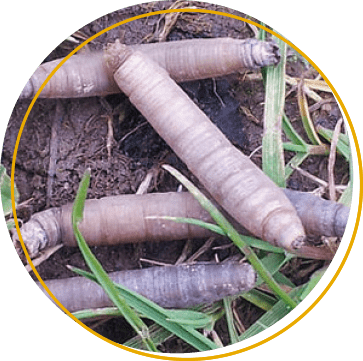
Extensive areas of turf can be turned yellow as a result of the grub’s feeding habits and this is often worsened by secondary predators; large birds, badgers and moles, ripping up the turf searching for the grubs. Leatherjackets also feed on the roots of many other plants (ornamentals, fruit and vegetables). They are legless, grey-brown, fleshy grubs, growing to a size of up to 45mm long with tough wrinkled skins and a number of small, pointed protuberances at the tail end.
The crane fly is well distributed through all areas of the UK, although certain species are better adapted to the far northern climate. They prefer damp wooded locations, streams, water margins and flooded areas and are most active during the early evening when temperatures drop.
When
Adult Crane flies, also known as ‘Daddy Long-legs’, can be seen from late spring through to autumn with the majority emerging in late August and early September, depending on the weather. The female has a distinctive pointed ovipositor at the end of the abdomen, which is used to penetrate the ground during egg laying.
Why
The reason for controlling crane fly larvae becomes all too apparent when we look at the life cycle of this insect.
The life-span of an adult crane fly is relatively short, about 14 days and in that time they must pair up and mate before the female can lay her eggs (about 300) just below the turf surface. With the right conditions of temperature and moisture, the eggs will hatch in 10 to 14 days releasing the first larval stage into the soil. At first the young grubs are too small to have much effect on grass health but as time progresses they grow and their effect increases. They usually undergo two moults before the onset of winter when soil temperatures fall. At this time the larvae now in their third stage stop feeding and move deeper into the soil to survive the cold. Long periods of extremely low temperatures (< -1°C) during the winter months will dramatically thin out the numbers of leatherjackets that survive into the following spring. Conversely, mild winters allow more to survive to adulthood and where we see several consecutive mild winters, the population of the crane fly can reach alarmingly high numbers.
When soil temperatures begin to rise in the spring, the overwintered larvae start to feed again and this is when they do most damage to turf. After the fourth larval stage is reached the hungry grubs engage in a feeding frenzy and this often coincides with the breeding season of secondary predators who, due to the much weakened grass root structure, can roll back the turf like a carpet to find the grubs, which make a good meal for their offspring. Very wet weather can cause local water-logging, often bringing hundreds of larvae to the surface. Leatherjackets continue to feed during the summer and complete their life cycle when they emerge as adults shedding the brown pupal case on the surface.
How do we control the problem of leatherjackets in turf?
Small grassed areas infested with leatherjackets can be ‘harvested’ by soaking with water after sundown and then covering overnight with a material impervious to light such as black polythene. This encourages the larvae to come to the surface where they can be collected and destroyed. This method is most effective in warm temperatures when there is sufficient soil moisture and the leatherjackets are feeding close to the surface. The covering material should be slowly peeled back in the morning to reveal the emerged grubs. It is important not to uncover too large an area at a time for collecting purposes, as the grubs will move back into the soil when exposed to daylight.
Without insecticides to control the crane fly larva, we will have to rely on the use of the entomopathogenic nematode Steinernema feltiae to reduce the number of leatherjacket grubs in the soil. Applied as a drench with a sprayer, the nematodes move through the moist soil to find a crane fly larva and enter the body, where they multiply and release a strain of bacteria that kills it. The dead larva rapidly decomposes, releasing more nematodes into the soil, which can then infect new hosts. To get the best results from using nematodes, they need to be applied carefully following all supplier recommendations.
The main points are listed below: -
- Upon receipt of the nematodes, use them immediately or store in a refrigerator at 5°C. DO NOT FREEZE.
- Use the entire contents of each pack at one time. Do not split or subdivide individual packs as each contains a measured dose of nematodes. Do not store diluted product.
- Ensure that the turf to be treated is thoroughly watered before and after treatment so that the nematode worms can move freely in search of the target grubs.
- It is best to apply on a dull day or in the evening to avoid exposing the worms to sunlight or high surface temperatures.
- Make sure the application equipment is thoroughly cleaned before use, removing any traces of chemicals using a proprietary tank cleaner and plenty of water to rinse.
- It is advisable to remove all fine filters (50 mesh or smaller) from the application equipment, including the nozzle filters.
- Mixing. Partly fill the sprayer tank with cool, clean water. Start the agitator and keep it running until the application is completed. Empty one pack of nematodes into a bucket containing a minimum of 10 litres water and stir the contents thoroughly making sure the entire product is mixed before adding it to the partly filled spray tank. Top up the tank to the required level. Apply immediately, keeping the suspension of nematodes agitated during application.
Nematodes are effective in soils between 12-20°C and the ideal time for this treatment is early autumn – after the crane fly eggs have hatched but before the soil cools below 12°C. These microscopic nematode worms are available in trays sufficient to treat 500m². The product has a limited shelf life (up to 8 weeks in low temperature storage) and must be used before the expiry date.
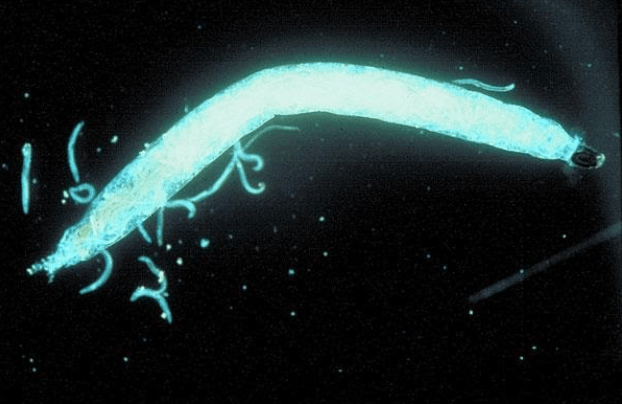
Nematodes infecting crane fly larva
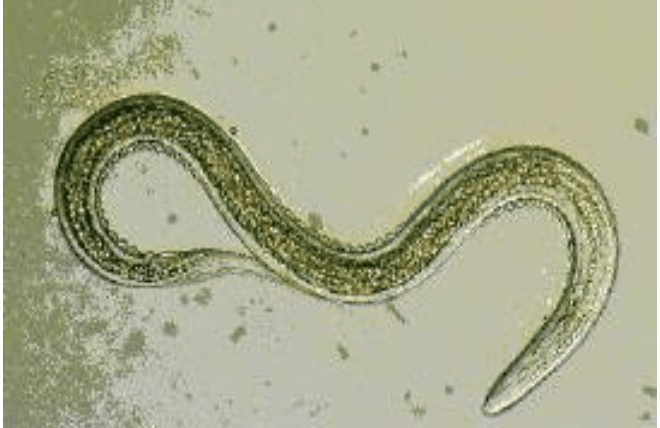
Parasitic nematode Steinernema feltiae
Chafer grubs
Chafer grubs, the larvae of the chafer beetle, are a fairly common pest of turf in Britain. They damage grass plants by feeding on the roots, which can result in serious thinning of the sward. However, more harm can be caused by predators, such as rooks, crows, badgers and foxes, excavating large areas of turf in search of the grubs.
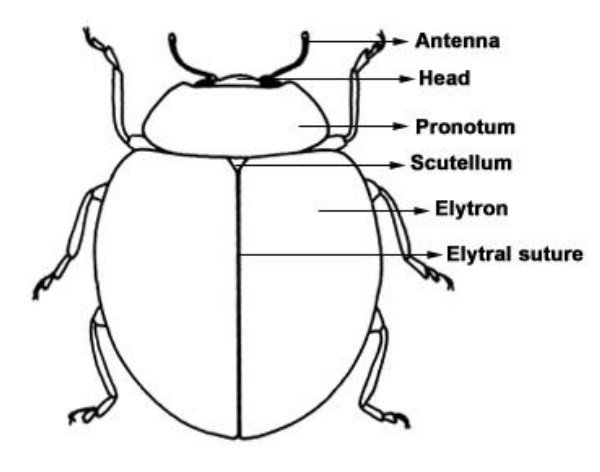
This simplified diagram below will help to clarify some of the terminology used to refer to the anatomy of the beetle. Beetles are classified in Coleoptera, the largest order of insects with over 370,000 species known globally. They vary considerably in shape but have two pairs of wings; the forewings (elytra– singular: elytron) are tough, hardened and serve to protect the inner wings and body when not in flight. Elytra are sometimes known as wing cases. The name Coleoptera translates from modern Latin and as ‘sheath-wings’.
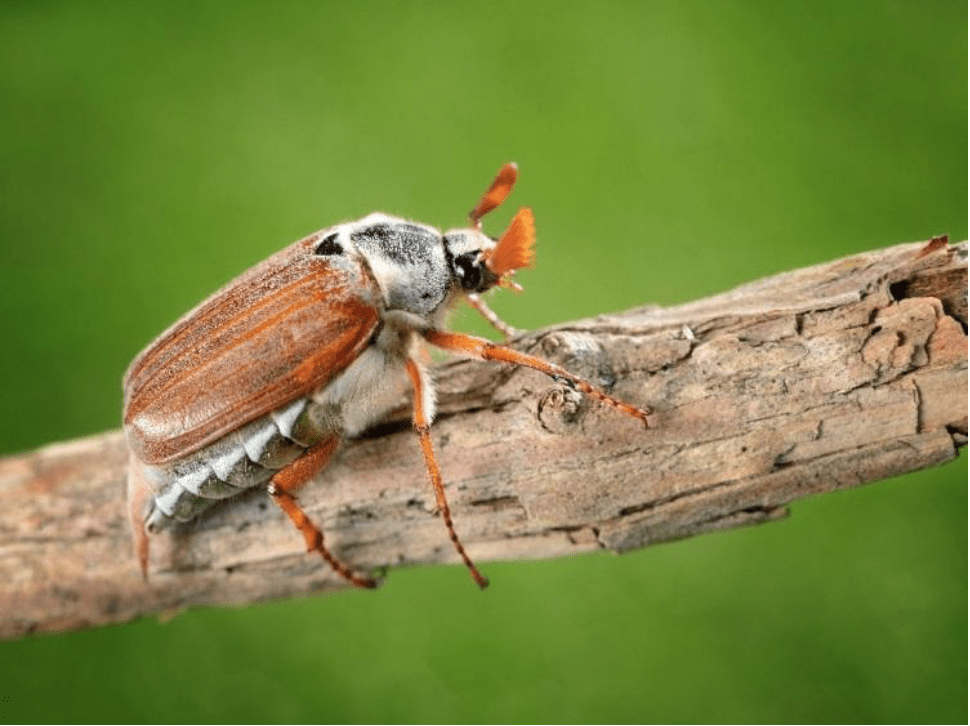
Chafer beetles have distinctively ‘clubbed’ antennae, the club consisting of a number of flaps (lamellae) arranged in the shape of a fan. This feature, which enhances the sense of smell, is especially noticeable in the cockchafer.
Chafer grubs are widely distributed across most of the UK. They are particularly common on light sandy and chalky soils in non-irrigated turf such as golf roughs, fairways and ornamental turf. For the most part they are not usually present in sufficient numbers to cause serious damage and warrant control measures. However, should an area suffer a large infestation, turf grass loss can result and this can be particularly unattractive. It is therefore important to understand this pest and know how to deal with it should the situation arise. Chafer grubs have a habit of infesting the same area year after year so effective control measures are essential for those routinely affected areas.
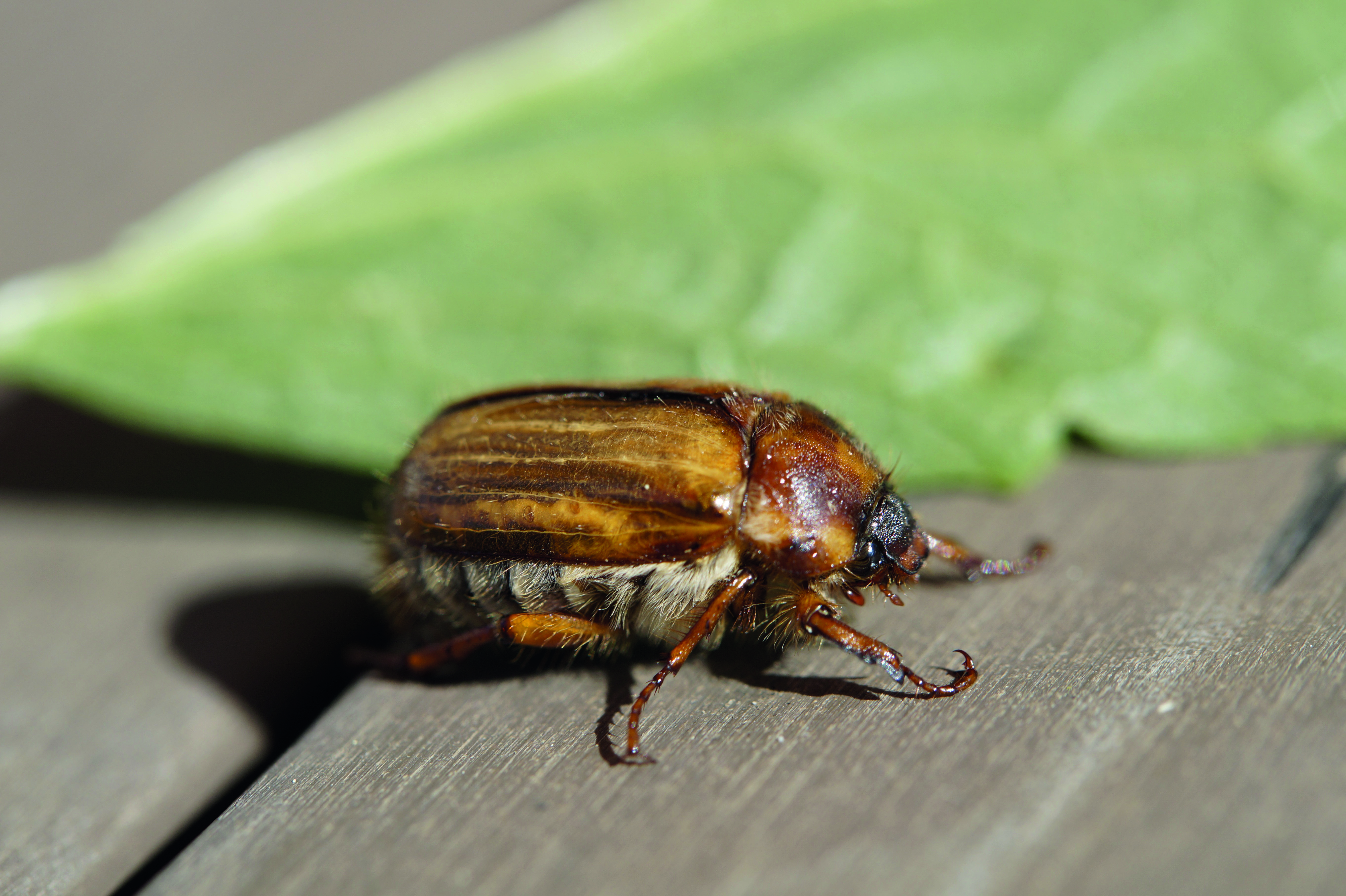
There are five species that can be found damaging turf in the UK: - Garden Chafer (Phyllopertha horticola), Cockchafer (or ‘May Bug’ Melolontha melolontha), Welsh Chafer (Hoplia philanthus), Summer Chafer (Amphimallon solstitialis), and Brown Chafer (Serica brunnea). The two main species found in turf (in appreciably large numbers) are the Garden Chafer and the Cockchafer.
The Garden Chafer is probably the most important in amenity turf; its grubs can often be found in large numbers in the rootzone. The adult beetles are about 10mm in size and have a metallic green head and pronotum with bronze wing cases (elytra).
The Adult Cockchafer, at 25-30mm in length, is much bigger than the Garden Chafer. They have a dark head with a shiny black pronotum covered by short, closely set hairs. The body is chestnut brown and exclusive to this species of chafer beetle are several forward-pointing white arrowheads on the abdomen just below the elytra. They have a dull black abdomen and a long, flat pygidium (stern). The antennae are tipped with large, fan-like clubs consisting of seven blades in the male, whilst the female has only six. Males have longer antennae than females.
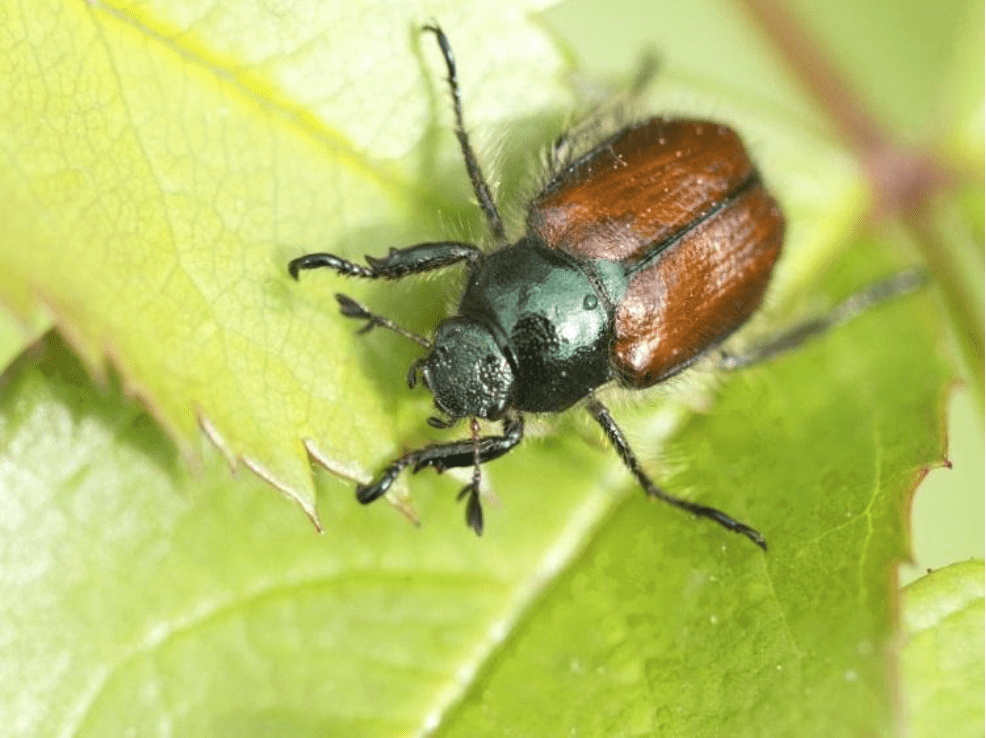
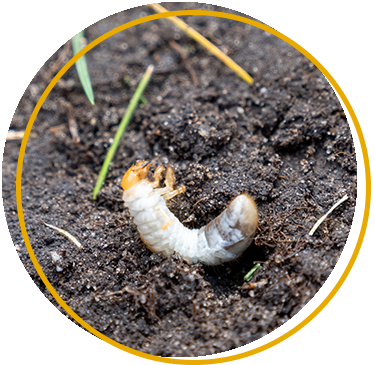
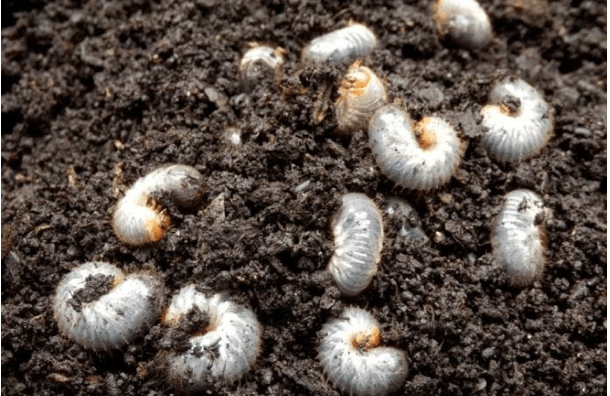
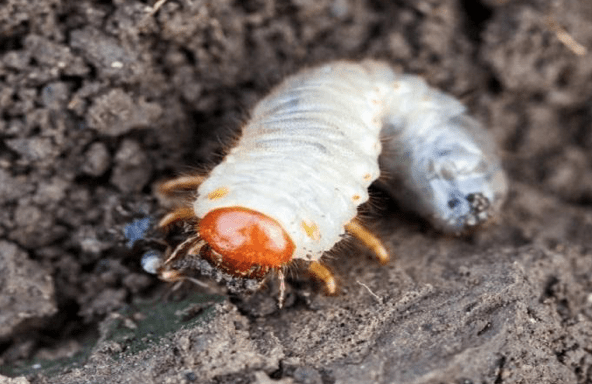
The larvae of chafer beetles have a curved, creamy white body with a nut brown head and a pair of legs on each of the front three segments of the thorax, which is typical of many beetle species. Cockchafer larvae are much bigger than those of the garden chafer (up to 40mm compared with 15mm).
When
The adults usually appear in May and June and are active for around 3 weeks during which time they will mate. The females lay 25-40 eggs during this period of adult activity.
The eggs are laid up to 5cm (garden chafer) below the soil surface and hatch after approximately five weeks Larvae continue to feed until late September when they move deeper into the soil to over-winter as soil temperature reduces. Pupation takes place in the following spring (around mid-May) normally below the surface. The Garden Chafer completes its life cycle in a single year but other species, such as the Cockchafer, feed below ground for 2-3 years before maturing into adult beetles and larvae of these may be found in infested soil at any time of the year, although there will be higher numbers in spring and autumn.
Why
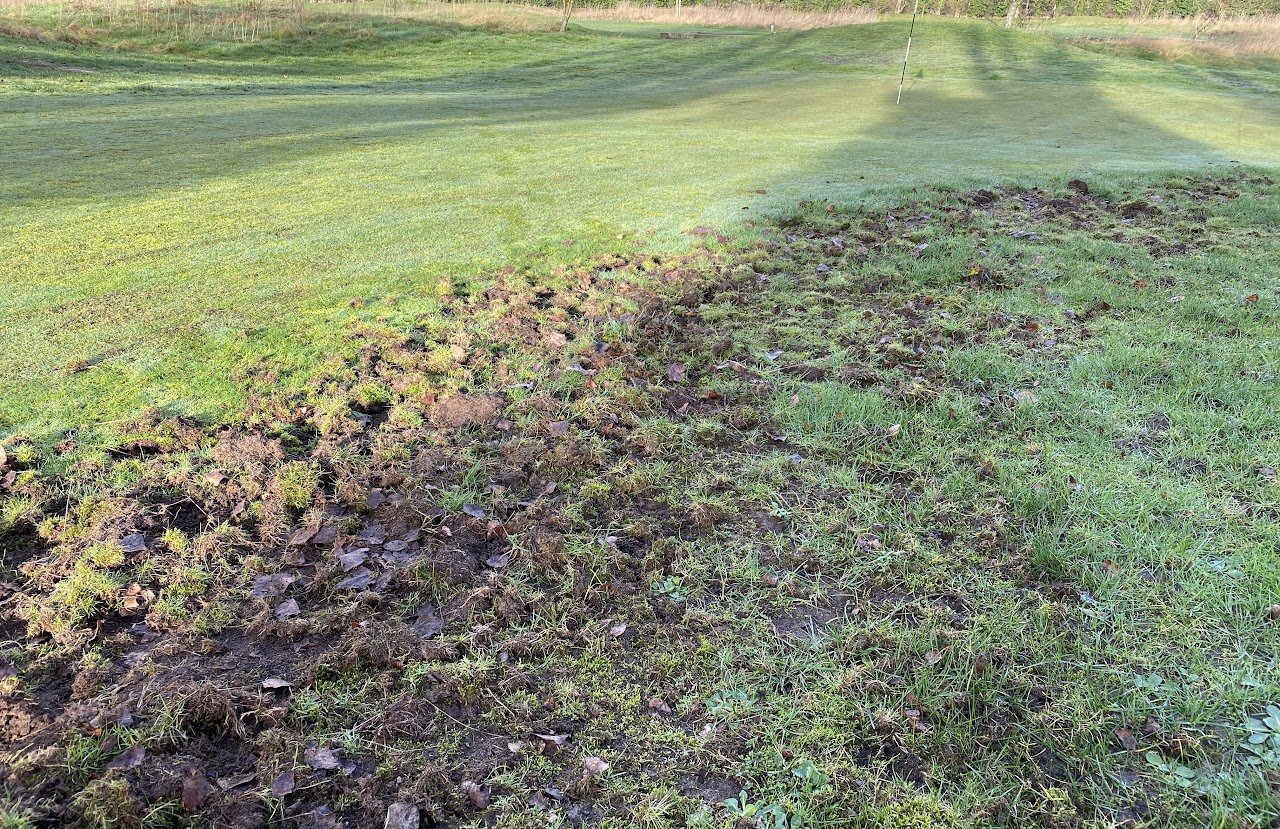
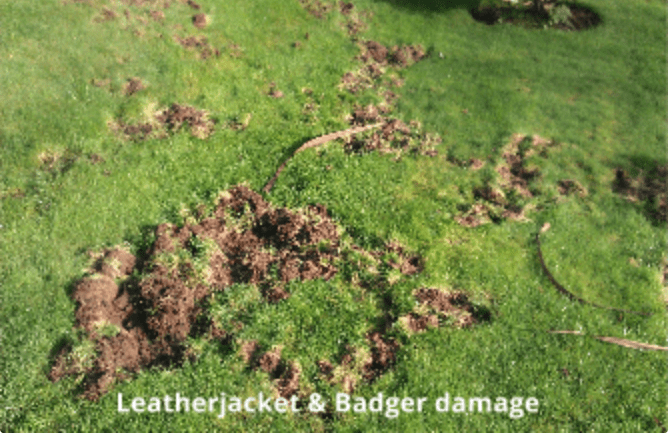
Chafer grubs eat the roots and thatch of all turf grasses and initial damage has the appearance of drought stress. Heavily infested turf first appears off-colour, grey-green and wilts rapidly in hot sun. Continued feeding will cause turf to die in large irregular patches. The tunnelling of the larvae makes the turf feel spongy underfoot and it may be easily rolled back like a carpet, due to the severed roots. In some instances grub populations themselves may not cause observable turf injury, however, severe damage to turf can be caused by predators feeding on the grubs. Large birds (especially crows), badgers, and foxes are the main culprits and show no regard for the grass as they excavate the surface to get at the tasty grubs!
How
Cultural Control by rolling grub-infested turf to restrict their movement and feeding activities has been tried but gives little benefit to improving the health of the grass and does not resolve the problem.
Biological control can be achieved with entomopathogenic nematodes (EPN’s – nematodes that are pathogenic to insects), applied between June to August when the soil is warm enough to sustain them. Various products are available such as ‘Nemasys G’. They are usually diluted with water and applied with a sprayer – with the nozzle filters removed.
EPN’s are transparent, microscopic, nematode worms that are parasites of certain insect larvae and have a symbiotic relationship with pathogenic bacteria carried in their intestines. As soon as the juvenile nematode enters the host it regurgitates the bacteria, which is very toxic to the chafer grub, killing it within 24 hours. The bacteria help break down host tissues to feed the nematode whilst it completes the rest of its life cycle within the grub and, after reproducing, the carcass bursts open releasing hundreds of new juvenile nematodes back into the soil where they search for new hosts to ambush. These EPN’s are obligate parasites, existing in the soil for short periods as free-living juveniles but are only able to reproduce inside the host grub.
Earthworms
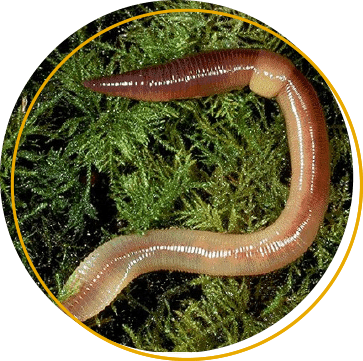
Earthworm casts result from the deposition of earth and decomposing organic matter on the surface of the turf or in the worm’s burrow. There are 28 commonly occurring species of earthworm found in the UK. Of these, 3 species (Lumbricus terrestris (lob or common worm), Aporrectodea calignosa (grey worm) and Aporrectodea longa (black-headed worm)) are responsible for the majority of surface casts. Most earthworm species leave their casts below the surface and therefore do not cause problems on grass surfaces.
When
Casts are produced seasonally, during the spring and autumn when conditions of temperature and moisture are suitable. As much as 50 tonnes of earthworm casts can be deposited per hectare in unmanaged grassland (5kg per m²)
Why is it necessary to control earthworm casting on sports surfaces?
Increased moisture retention and mud from casting can reduce the grip on sports turf by almost 20% according to figures from research conducted at Leeds United pitch at Elland Road and from data collected at the Headingley Sports Ground by the S.T.R.I.
In addition, worm-casts give:
- Poor appearance
- Uneven surface
Worm-casts are a mixture of finely divided soil and digested organic matter, so this is why surface casts encourage weeds (casts make an ideal seed compost). Moles can also create a secondary problem in soils with high worm activity as they feed on worms.
How
How do we control the nuisance of worm casts? We can tackle this problem using an integrated management program.
Cultural Control
This requires some understanding of the earthworm’s biology and habits.
Worms are encouraged by:
- A suitable supply of food
- The right soil pH (5-7.5)
- A good texture (light sandy soil/medium loam)
- Moisture
- Temperature
Earthworms feed on dead or decomposing plant materials – they are great at recycling organic things that man or nature discards. Old plant roots, fallen leaves and grass clippings, all make a tasty meal for a hungry worm. Not all earthworms come to the surface to feed; indeed the majority survive on food they can find below ground. It turns out that the surface feeding worms are those that also cast above ground. This means that in some circumstances we can reduce worm casting by sweeping up fallen leaves and where possible boxing grass clippings.
Worms do not live comfortably in soils with extreme pH. They prefer neutral soils within the pH range of 5 to 7.5 Therefore this presents us with a further opportunity to discourage earthworms, by manipulating the soil pH. First carry out a soil test to determine the pH and then consider changing it using sulphur products to acidify and move it out of the range that the worm prefers. Soil pH manipulation must be done carefully and it is advisable to seek help from an experienced agronomist.
Earthworms need plenty of soil moisture in order to move around. In areas where the soil is poorly drained worm cast can be a particular problem. Installing better drainage is often all that is needed to deal with casting in boggy soils, although it can be an expensive fix.
Lesson Notes
- Turf pests — carefully study the turf pests introduction section to learn about what turf pests are, when they occur and where they appear and what to do when they do appear
- Other factors — understand how other factors increase the likelihood of turf pests
- Control — learn different types of maintenance procedures that help control and reduce the incidence of pests
- Information sheet — study the products available to help with turf pests